Exercise: Theory Of Machines

Questions for: Theory Of Machines

The equation of motion for a vibrating system with viscous damping is
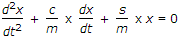
,
if the roots of the equation are __________ then the system will be under damped.
A:
equal
B:
real
C:
complex conjugate
D:
Answer: C
No answer description is available. Let's discuss.
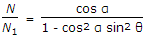
The ratio of velocities of the shafts connected by Hooke's joint is given by (where N and N1 = Speed of driving and driven shafts (in r.p.m.) respectively, θ = Angle through which the arms of the cross turn, and α = Angle of inclination between the two shafts)
A:
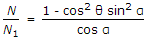
B:
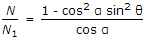
C:
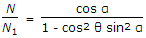
D:
Answer: A
No answer description is available. Let's discuss.
When two pulleys are connected by means of a cross belt drive, then both the pulleys will rotate in __________ directions.
A:
same
B:
opposite
C:
D:
Answer: B
No answer description is available. Let's discuss.
A rigid body, under the action of external forces, can be replaced by two masses placed at a fixed distance apart. The two masses form an equivalent dynamical system, if
A:
the sum of the two masses is equal to the total mass of body
B:
the centre of gravity of the two masses coincides with that of the body
C:
the sum of mass moment of inertia of the masses about their centre of gravity is equal to the mass moment of inertia of the body
D:
all of the above
Answer: D
No answer description is available. Let's discuss.
The coefficient of fluctuation of speed is __________ of maximum fluctuation of speed and the mean speed.
A:
sum
B:
difference
C:
product
D:
ratio
Answer: D
No answer description is available. Let's discuss.
Ad Slot (Above Pagination)
Quiz