Exam
Adept.com
Home
About Us
Contact
🏠 Home
Time Response Of Reactive Circuits
Exercise: Time Response Of Reactive Circuits
📂 Time Response Of Reactive Circuits
✅
Questions for: Time Response Of Reactive Circuits
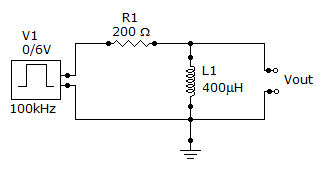
Referring to the give circuit, the output will
A:
decay to zero at the end of the pulse
B:
reach 6 V at the end of the pulse
C:
reach 3.78 V at the end of the pulse
D:
reach 5.16 V at the end of the pulse
Answer:
A
No answer description is available.
Let's discuss.
Discuss About this Question.
Post
A steady-state condition is reached when
A:
the output voltage reaches the average value of the input voltage
B:
the output voltage reaches the input voltage
C:
the output voltage reaches approximately 63% of the input voltage
D:
the output voltage reaches the effective value of the input voltage
Answer:
A
No answer description is available.
Let's discuss.
Discuss About this Question.
Post
Referring this circuit, determine the maximum output voltage when a single pulse is applied as shown. The total resistance is 60
.
A:
2.73 V
B:
27.33 V
C:
30 V
D:
2.67 V
Answer:
B
No answer description is available.
Let's discuss.
Discuss About this Question.
Post
When a 12 V input pulse with a width equal to one time constant is applied to an
RC
integrator, the capacitor charges to
A:
0 V
B:
12 V
C:
6.3 V
D:
7.56 V
Answer:
D
No answer description is available.
Let's discuss.
Discuss About this Question.
Post
With an
RL
integrator, at the instant of the rising pulse edge,
A:
all the input voltage is across the resistor
B:
all the input voltage is across the inductor
C:
63 percent of the input voltage is across the resistor
D:
63 percent of the input voltage is across the inductor
Answer:
B
No answer description is available.
Let's discuss.
Discuss About this Question.
Post
Ad Slot (Above Pagination)
‹ Prev
1
2
3
4
5
6
7
8
9
10
11
12
13
14
Next ›
Install ExamAdept
Fast access — add this app to your device.
Install
✕
To install on iPhone/iPad: tap Share →
Add to Home Screen
.
Quiz
Discuss About this Question.